
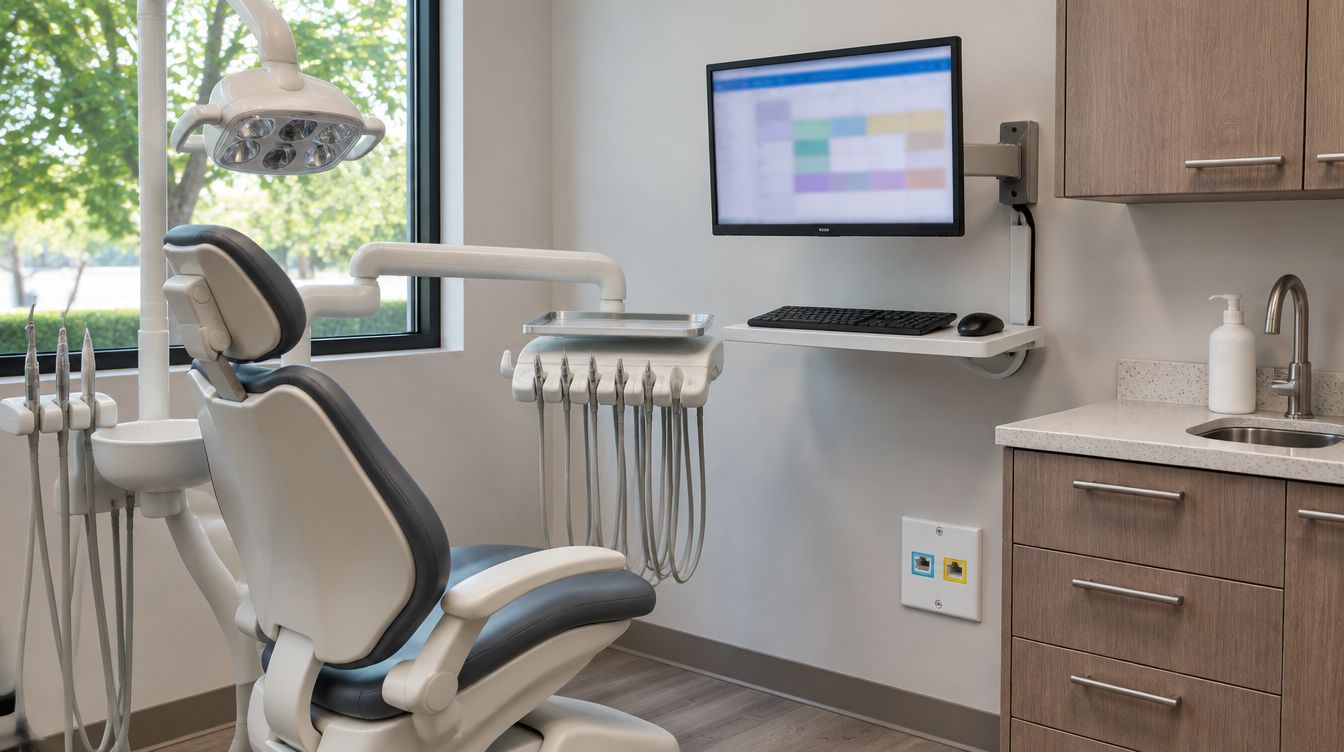
Handover is the end of the buildout, not the end of the network. Some Phoenix practices hand the finished office to an IT company they already use; others ask ClearMax Labs to keep looking after the Dentrix server, the closet and the computers it installed. That ongoing plan is optional, written up as its own proposal, and never required to get the buildout done.
Last updated: November 2026
Inside a Phoenix care plan
- Monitoring: alerts from the Dentrix server's drives and services, the battery unit, the firewall, the switches, the access points and the closet temperature, read by a person rather than left in an inbox.
- Cybersecurity: endpoint protection on each PC, firewall rules reviewed, unused accounts closed, and the guest WiFi kept walled off from anything clinical.
- Backup checks: the scheduled Dentrix database exports, the local copy and the off-site copy confirmed, with a sample restore at set intervals.
- Updates: Windows, drivers and firmware applied after hours and held back when a Dentrix release needs them to wait.
- People changes: a new hire's login, email and badge ready on day one; a departing employee's removed the same day.
- Vendor calls: Henry Schein One, the imaging company and the internet provider contacted and chased on the practice's behalf.
Why the documentation matters more than the contract
Every buildout ends with a binder: drop map, access point positions, closet diagram, server build sheet, backup schedule, admin credentials. A care plan works from that binder and keeps it true. After any change, the cable records and server sheet are corrected, so a new chair or a replaced sensor takes a look at the map instead of a hunt through the ceiling.
Six years of backups, at least
Arizona requires a practice, unless otherwise required by law, to retain the original or a copy of an adult patient's dental records for at least six years after that patient's last date of dental services. For children the period runs to at least three years after the eighteenth birthday or six years after the last visit, whichever is later. Retired servers and old backup drives are kept until those dates have passed, and a replacement machine is never wiped clean of history without a verified copy elsewhere.
Heat season on the plan's calendar
In 2024, NWS Phoenix counted 70 days at or above 110 degrees and 143 days at or above 100. Each spring, before that stretch begins, the plan tests the closet's cooling and its temperature alert, replaces a tired battery unit, and confirms that the server and network come back up unattended after a power cut. From June on, a rising closet temperature is treated as an alert, not a curiosity.
What the practice sees each period
A short written report on a schedule the office chooses: patches applied, problems found and closed, machines nearing replacement, and vendors that still hold remote access. Hands-on work is booked with a ClearMax technician outside patient hours where it can be. Response targets and the work included are stated in the proposal itself.
Pricing a care plan
The proposal is built from counts: computers, staff, devices in the closet and the state of the documentation. It arrives in writing after a conversation, and this site publishes no figure. Ending a plan hands the practice the up-to-date binder.
Care plan questions
If we switch IT companies later, does the binder go with us?
Yes. It is written for whoever looks after the office next.
How soon after opening can a plan begin?
Any time; many offices wait a few weeks. The buildout overview explains the project itself.